

Injection molds are among the most valuable, heavy, and operationally critical assets in a plastics manufacturing facility, yet I still encounter production areas where molds occupy wooden pallets, sit directly on the floor, or remain crowded together on fixed shelves that make identification, inspection, and safe retrieval unnecessarily difficult. 🏭🔩 A mold may represent a major investment in design, machining, testing, and customer approval, so the storage system should protect more than its physical steel body; it should also protect production continuity, mold traceability, maintenance quality, and the people who move it. A 65% opening drawer mold rack offers an intelligent middle ground between a completely fixed shelf and a fully extending drawer, because the shelf moves far enough to provide controlled access to the stored mold while keeping a significant part of the loaded drawer within the rack structure. When engineers select the correct capacity, anchoring method, drawer dimensions, transfer equipment, and operating procedure, a solution produced by Detay Industry can help transform a crowded mold storage corner into an orderly, accessible, and professionally managed production zone. 😊

What Does a 65% Opening Drawer Actually Mean?
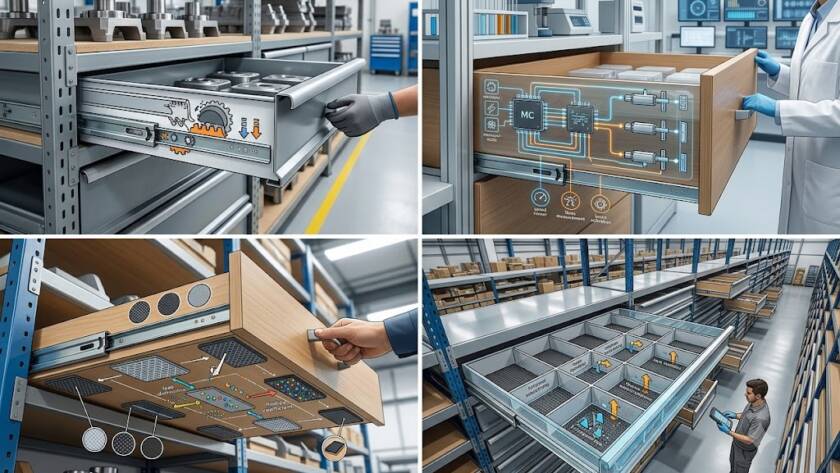
A 65% opening design means that the drawer or movable shelf extends outward to approximately 65% of its total depth during access, leaving the remaining section supported within the main rack frame, and this arrangement can provide enough exposed surface for suitable lifting equipment to reach the mold while limiting the amount of load projected into the aisle. The manufacturer’s 65% opening mold shelf information explains that this semi extension format aims to combine access, compact use of aisle space, and load stability, although the actual safety of any installation still depends on the declared drawer capacity, mold position, floor anchoring, frame design, and operating instructions. I like to describe the system as opening a well balanced book rather than pulling an entire table away from the wall, because the operator gains access to the important area without moving the complete storage surface beyond the rack.
This design can be particularly helpful when a plant wants a dedicated mold rack but has limited aisle width, frequent mold changes, or no practical reason to expose the full drawer depth. The 65% opening should not be interpreted as a universal percentage that automatically suits every mold, because the mold’s dimensions, lifting points, weight distribution, and transfer method must still allow safe access. A wide mold with lifting eyes located near its rear edge may require a different drawer depth or access arrangement than a compact mold with centrally positioned lifting points, so engineers should evaluate the real mold portfolio instead of selecting a rack from nominal external dimensions alone.
Why Injection Molding Facilities Use Drawer Mold Racks
A fixed shelf can store a heavy mold securely when it is designed and loaded correctly, but retrieval may require workers to reach into the rack, drag the mold toward the aisle, reposition lifting equipment several times, or use a forklift in a narrow area where visibility and clearance are limited. A purpose built drawer mold rack brings the stored mold toward the handling point instead, which can simplify crane access, reduce unnecessary horizontal movement, and help technicians inspect lifting connections before raising the load. OSHA’s current warehousing safety guidance advises workplaces to inspect racking, isolate damaged units, place heavier loads on lower or middle levels, maintain clear aisles, and avoid exceeding declared rack capacities, and these principles provide a useful safety foundation even though every plant must also follow its own national rules and risk assessment.
Organization creates another important advantage, because molds can be assigned according to production line, machine tonnage, customer, product family, change frequency, maintenance condition, or planned production date. I once visited a workshop where technicians remembered mold locations through personal experience rather than a shared system, and whenever the most experienced worker was absent, the search for one mold felt like looking for a particular book in a library with no shelf numbers. 📚 A labelled drawer rack system supported by a digital location record makes the storage process easier for the whole team, while status labels such as ready for production, awaiting maintenance, protected for long storage, or quality hold can prevent the wrong mold from reaching a machine.
Calculate Every Load Before Selecting the Rack
The most important technical number is not the total capacity printed for the complete rack, but the permitted load for each individual drawer under the manufacturer’s stated operating conditions, because a unit may appear capable of holding several molds while one drawer remains overloaded by a single dense tool. The planning team should record each mold’s verified weight, footprint, height, center of gravity, lifting points, base condition, accessories, cooling connections, and intended storage level, then add a reasonable allowance for fixtures or components that may remain with it. Workers should never estimate mold weight by appearance, and the rack should carry a durable capacity label that remains clearly visible after installation.
OSHA’s general material storage rule states that storage must not create a hazard and that stored materials must remain stable and secure against sliding or collapse, while its warehousing guidance specifically warns against exceeding rack and shelf load capacities. A correctly configured injection rack should therefore match the heaviest planned mold rather than the current average, because future projects often introduce larger tools and teams naturally use available space unless the limits are obvious. I recommend preparing a mold inventory table before requesting quotations, since this simple document helps the manufacturer determine drawer width, depth, level spacing, individual capacity, rack height, and the number of required modules with far greater accuracy.
| Selection Factor | Questions to Ask | Why It Matters |
|---|---|---|
| Individual mold weight | What is the verified weight, including attached plates and accessories? | Each drawer must remain within its declared load capacity |
| Mold dimensions | Does the mold fit completely on the drawer with safe edge clearance? | Overhanging molds can affect stability, handling, and access |
| Opening requirement | Can lifting equipment reach approved lifting points at 65% extension? | The opening percentage must support the actual transfer method |
| Change frequency | Which molds enter production weekly, monthly, or rarely? | Frequently used molds should occupy practical access levels |
| Transfer equipment | Will the team use a bridge crane, jib crane, hoist, forklift, or transfer cart? | Rack position and aisle clearance must suit the selected equipment |
| Floor and anchoring | Is the concrete suitable, level, and approved for the required anchors? | The frame must remain stable under loading and drawer movement |
| Maintenance condition | Will molds be stored with water, oil, residue, or loose accessories? | Drip control, cleaning, corrosion protection, and separation may be necessary |
Plan Stability, Anchoring, and Drawer Interlocks
A heavy mold moving outward changes the forces acting on the rack, which means the frame, base plates, anchors, drawer guides, stops, and surrounding floor must operate as one engineered system. The rack should stand on a level and structurally suitable floor, installers should use the specified anchors and tightening procedure, and the completed unit should be checked for alignment before loading. A professional installation by Detay Industry should also account for the full rack configuration, adjacent equipment, seismic or local structural requirements where relevant, and any impact risk created by forklifts or transfer vehicles.
Where the rack design provides a mechanism that prevents several loaded drawers from opening simultaneously, workers should never bypass it, because opening multiple drawers can move too much weight toward the aisle and may compromise stability. When a model does not include such a mechanism, the operating procedure should clearly require one drawer at a time, and supervisors should verify compliance through training and observation. Drawer end stops must prevent accidental over travel, locks must hold drawers securely in their closed position, and operators should never use improvised bars or damaged handles to force movement. OSHA recommends inspecting and maintaining racking and immediately isolating damaged storage areas, so bent frames, cracked welds, loose anchors, difficult drawer travel, unusual noise, or visible misalignment should trigger a formal inspection rather than a temporary workaround.
Coordinate the Rack with Cranes and Transfer Equipment
The rack should never be planned separately from the equipment used to retrieve the molds, because the crane hook, lifting beam, chain, sling, forklift attachment, or transfer cart needs a clear and controlled path from the storage position to the injection molding machine. The HSE’s loading and unloading guidance emphasizes clear loading areas, stable working surfaces, evenly managed loads, suitable mechanical equipment, and keeping unnecessary people away from moving heavy loads. In practice, the mold storage area should remain free from pallets, scrap, hoses, packaging, and temporary materials that restrict the operator’s view or force workers to stand beneath or beside a suspended mold.
I recommend checking the hook approach while the drawer is fully extended to its permitted 65% position, confirming that chains do not rub against the rack, the lifting angle remains suitable, and the mold can rise vertically without contacting the shelf above. The rack should not become a substitute lifting device unless the manufacturer has specifically engineered and approved it for that function. A crane or hoist should carry the mold’s weight during transfer, while the drawer supports the mold only during storage and the planned pickup stage. This distinction protects both the rack and the operators, because forcing a mold sideways across a drawer surface can damage guides, protective coatings, connectors, and the mold base.
Choose Practical Storage Heights and Aisle Clearances
Although molds are too heavy for manual lifting, ergonomic principles still matter because workers connect slings, inspect surfaces, remove protective materials, operate drawer handles, read labels, and perform maintenance around the rack. OSHA’s ergonomics technical manual recommends minimizing handling distance, range of motion, bending, twisting, and high force pushing or pulling, while encouraging lift assistance and practical working heights. Frequently changed molds should therefore occupy levels that allow workers to see and reach lifting points comfortably, while unusually heavy or rarely used molds usually belong on lower levels when the rack manufacturer and transfer method permit this arrangement.
The aisle must remain wide enough for the drawer opening, the mold transfer equipment, the operator’s safe position, and any required exclusion zone. OSHA’s material handling requirements also call for clear, well maintained, and properly marked aisles where mechanical equipment operates. A well planned mold shop should therefore mark the drawer extension area on the floor, prevent unrelated storage within that boundary, and keep emergency access routes open. Yellow floor lines alone do not create safety, but they provide a visible reminder that the empty space in front of the rack is working space rather than spare storage space.
Create a Complete Mold Preparation Zone
A drawer rack becomes more useful when the surrounding area supports inspection, cleaning, minor maintenance, identification, and transfer preparation, because technicians should not have to carry tools and documents back and forth across the production hall. A heavy duty industrial table can provide a stable surface for checking fittings, preparing lifting accessories, reviewing mold cards, or organizing removed components, while an ergonomic workbench can hold hand tools, cleaning supplies, gauges, protective equipment, and maintenance records.
This combined zone should include adequate lighting, clear floor space, suitable waste containers, spill control materials where necessary, and a defined location for lifting accessories awaiting inspection. The team should keep loose bolts, water fittings, electrical connectors, hydraulic couplings, and mold inserts in labelled containers rather than resting them on the drawer beside the mold. When storage, preparation, and documentation share one logical area, technicians can inspect the mold before production, identify damage earlier, and return every accessory to its correct location after a changeover. Detay Industry can support this integrated approach by coordinating rack dimensions with benches, surrounding cabinets, access routes, and the plant’s broader production workflow.
Protect Molds During Long and Short Storage Periods
A rack protects molds from uncontrolled floor storage, but the drawer cannot prevent corrosion, blocked cooling channels, damaged connectors, or contamination unless the plant also follows a suitable mold preservation procedure. Before storage, technicians should clean the mold according to its material and production history, drain or manage cooling circuits as required, protect approved surfaces against corrosion, cap vulnerable connections, secure loose components, and record the mold’s status. Oils, cleaners, rust preventatives, and other chemicals should follow their safety data sheets and the mold manufacturer’s recommendations, and workers should never use an incompatible product simply because it is available nearby.
Each drawer should display a mold identifier that can also be read while the drawer remains closed, and the digital maintenance system should record the rack, module, level, customer, last production date, preservation status, next planned use, and any open maintenance action. This traceability turns the rack into part of the production information system rather than a passive steel structure. A small drip tray or removable protective surface may help where residual fluid is expected, but engineers must verify that any added material does not reduce drawer capacity, interfere with movement, or create an unstable mold base.
A Practical Example for an Injection Molding Plant
Imagine a plant operating six injection molding machines and managing thirty active molds weighing between 350 and 1,200 kilograms, with eight molds entering production several times each month and the remainder used for seasonal or customer specific orders. I would begin by weighing and measuring every mold, identifying approved lifting points, recording change frequency, and confirming which crane serves the storage area. The most frequently changed molds would occupy accessible lower and middle drawers, while the heaviest tools would remain on levels approved by the rack designer and compatible with the crane’s safe approach.
The 65% extension would then be tested using a representative mold, not an empty drawer, while competent personnel observe clearance, hook alignment, sling angles, operator position, required push or pull force, and the path from the rack to the machine. Only one drawer would open at a time, the transfer zone would remain marked and free from unrelated traffic, and every mold would receive a location code linked to the production planning system. This example shows why Detay Industry should receive complete mold and facility data before manufacturing begins, because the best configuration grows from actual weights, dimensions, machines, cranes, aisles, and changeover routines rather than from a generic rack drawing. 📋🏗️
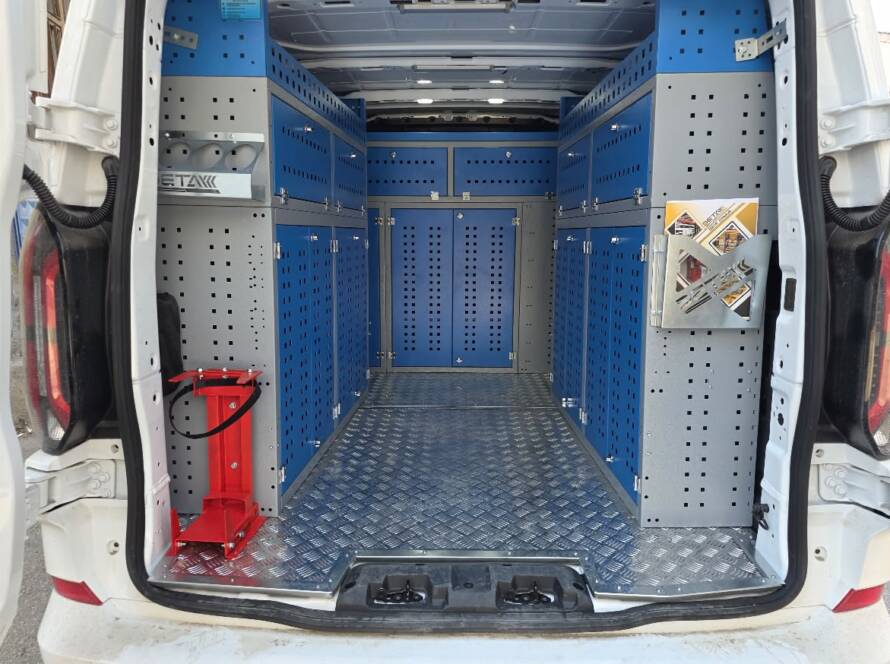
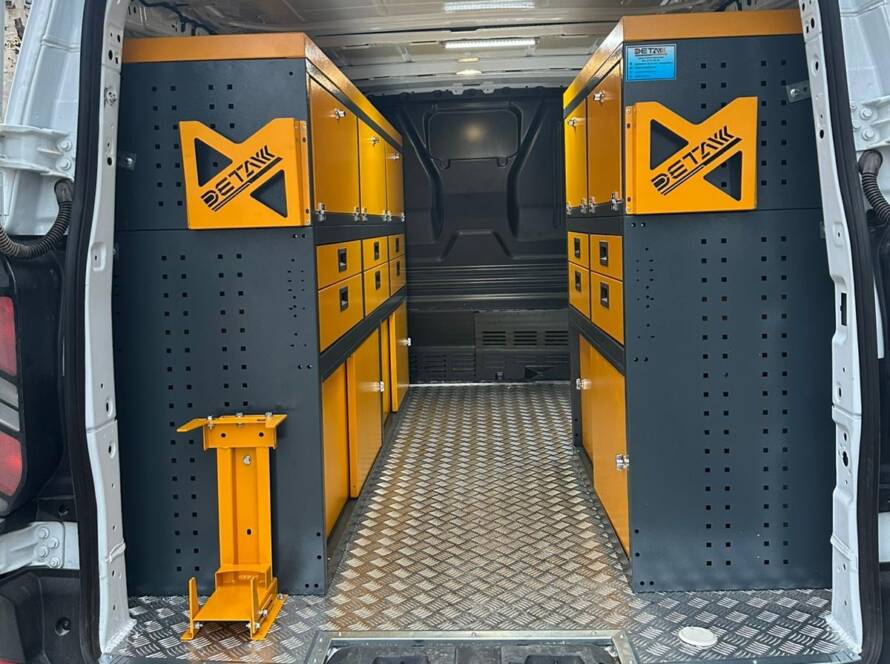
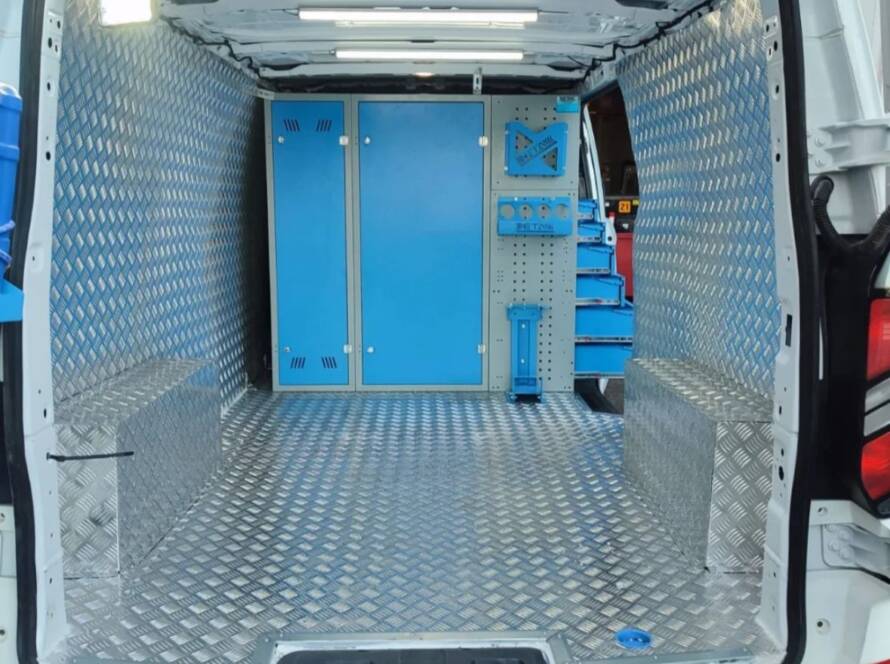
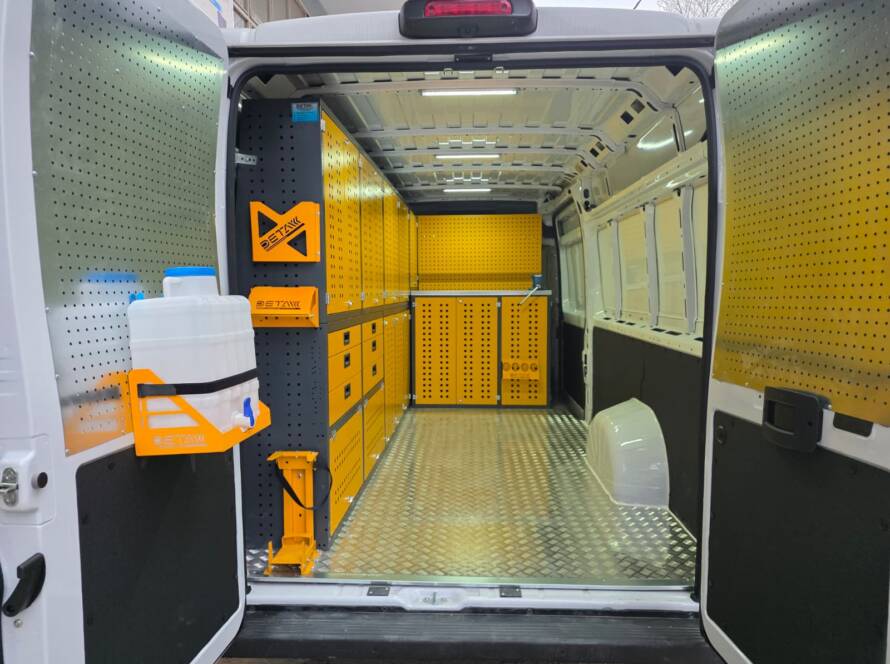
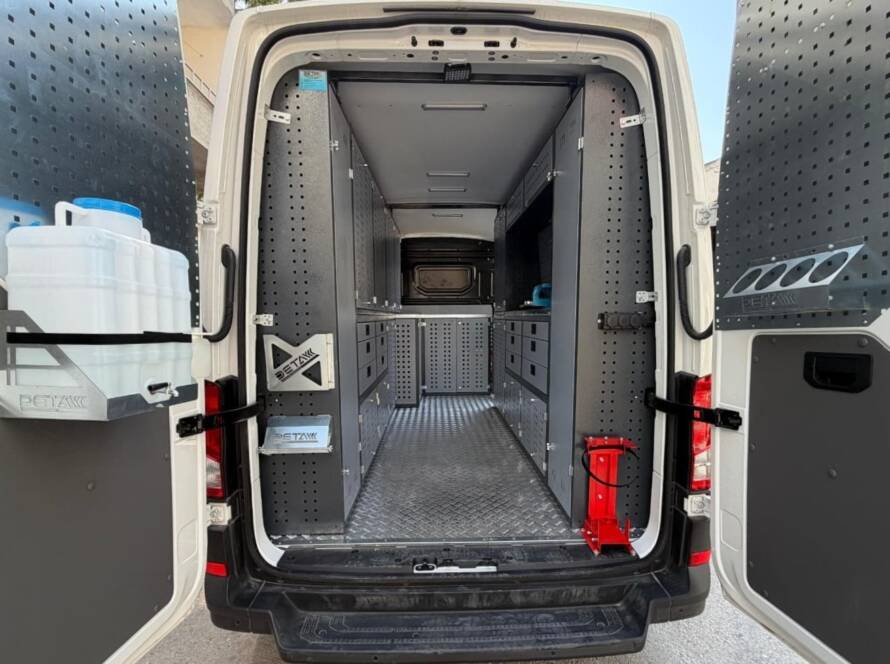
The plant could also apply the same organizational thinking across its wider rack systems strategy, and although mobile storage applications differ technically, the modular planning principles used in an in-vehicle equipment rack or an in-vehicle cabinet system offer a useful reminder that every tool, accessory, and consumable should have an assigned, secure, and easily identifiable location. The structural requirements are different, but the goal remains similar: reduce searching, prevent uncontrolled movement, and help workers understand the storage system at a glance.
Inspect the Rack and Train the Operators
A drawer mold rack requires planned inspection because repeated loading, drawer movement, accidental contact, dust, oil, vibration, and heavy mold changes can gradually affect its condition. Operators should perform simple visual checks before use, looking for loose anchors, structural damage, cracked welds, bent guides, worn rollers, damaged locks, missing labels, unusual drawer resistance, and materials obstructing the travel path. A competent person should complete more detailed inspections at intervals defined by the manufacturer, the risk assessment, local rules, and the severity of use, while any damaged module should remain unloaded and isolated until an authorized evaluation confirms the correct repair.
Training should cover declared capacities, mold positioning, one drawer operation, locking procedures, crane communication, exclusion zones, lifting accessory checks, housekeeping, emergency response, and reporting defects. Workers should understand that a drawer moving smoothly when empty does not prove that it is safe under maximum load, and they should never increase the capacity through informal reinforcement, replace components with unapproved parts, or change the anchoring arrangement without engineering review. A simple checklist placed beside the rack can guide routine use without replacing formal training.
Conclusion
A 65% opening drawer mold rack can give an injection molding facility a practical balance of mold accessibility, compact aisle use, organization, and controlled handling, but the percentage alone does not determine whether the system will perform safely. The plant must match every drawer to verified mold weights and dimensions, confirm crane access, maintain sufficient aisle clearance, anchor the rack according to its engineering design, keep only one drawer open when required, protect molds before storage, and inspect the complete installation throughout its working life. 🌟 When these elements come together, the rack becomes more than a place to put heavy steel tools; it becomes a dependable bridge between storage, mold maintenance, production planning, and efficient changeovers. With a facility specific design and disciplined operating procedures, Detay Industry can help injection molding teams create a storage area where valuable molds remain accessible, traceable, protected, and ready for the next production order.